
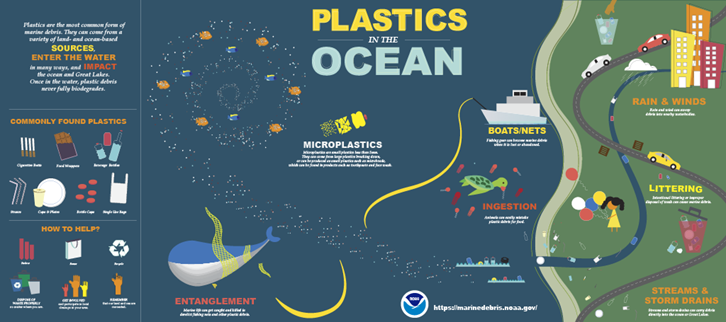
Ever wonder how trash and litter winds up along our shorelines and in the ocean? Many of our rivers in the U.S. flow to the ocean, Great Lakes, or the Gulf of Mexico, as is the case here in Texas.
In North Central Texas, the Trinity River watershed flows all the way from just south of the Red River down to Galveston and the Gulf of Mexico.
Not all litter is intentional and much of what finds its way into our waterbodies comes from land-based sources such as overflowing trashcans and trash that accidentally escapes into the environment. Litter and trash can easily get picked up by the wind or rain and find its way down storm drains which then flow to our streams, rivers, and lakes and eventually the Gulf of Mexico. The Six Degrees of Separation infographic from the Ocean Conservancy shows just how easy that journey is.
So, what can we all do to make sure that our trash and little does not wind up in our local waterbodies or the Gulf? Here is a list of simple precautions you can take.
- Seal up your bags of trash well and make sure to keep the lids on your trash and recycling carts closed before putting them on the curb. This will help keep items in and critters out.
- Make sure there are no loose or light items or trash in the back of your vehicle before heading down the road. These items can easily be picked up by the wind and blown out into the street, especially as you increase speed while driving.
- When taking out trash to a dumpster, avoid days that are particularly windy as they can easily fly away.
- Finally, the best prevention is by reducing the amount of trash we generate in the first place and sorting out any recyclables. By keeping items out of the waste stream in the first place this keeps them from eventually becoming litter.
Want to learn more? Check out these great resources and organizations to learn more about marine or aquatic debris and ways you can help combat it.
Marine Debris Program - Office of Response and Restoration, NOAA
NOAA Trash Talk Series